Food Diplomacy in Berlin, Germany’s Economic Mood, UK’s Critical Minerals Push, Trump’s Ukraine Framework, Afghanistan-Pakistan Tensions
Which European country launched a major strategy to reduce dependence on foreign critical minerals as part of its net-zero and economic resilience plans?
The United Kingdom.
 Dear Readers,
Welcome to the Diplomacy Berlin Newsletter.
There’s something fitting about opening this week’s edition with a chef who thinks like a diplomat. In our conversation with Philip Vogel of Orania.Berlin, food becomes more than craft — it becomes connection. His idea that peace often begins at the table, not in conference rooms, lingers as you read the rest of this week’s stories. It’s a reminder that dialogue, humility, and curiosity matter just as much in geopolitics as they do in a kitchen in Kreuzberg.
And there is plenty of geopolitics to digest. Germany’s business mood continues to dip, raising questions about how quickly recovery can take hold. The UK is racing to secure the minerals that will power its green transition, while Washington’s leaked 28-point proposal for Ukraine exposes the strategic, moral, and institutional risks Europe must now confront. The tension between Afghanistan and Pakistan is another pressure point — one that could destabilise a region already stretched thin.
Meanwhile, Trump’s return to the global stage shapes everything from Ukraine diplomacy to how the US might use its upcoming G20 presidency. For Europe, and especially for Berlin, this is not background noise but the environment in which choices must be made. Germany’s own foreign minister is in the Western Balkans this week, pushing EU accession as a strategic anchor in a moment when the region matters more than ever.
Amid all of this, we also acknowledge the celebrations of our partners and friends marking national days in the UAE, Thailand, and Finland — reminders that even in a world full of friction, there is room for joy, identity, and shared moments.
So perhaps Vogel is right: the best decisions are often made not when people posture, but when they sit down together. With good food, good conversation, and a willingness to listen. As always, thank you for joining us. If you would like to contribute articles, event coverage, or press releases for upcoming editions, please reach out at editorial@diplomacy.berlin.
With best regards,
Sigrid Arteaga
Food Connects – In Conversation with Philip Vogel, Executive Chef of Orania.Berlin
The Orania.Berlin is an extraordinary place – more than just a hotel or restaurant. Here, artists and diplomats, entrepreneurs and travellers, people with stories and perspectives from all over the world come together.
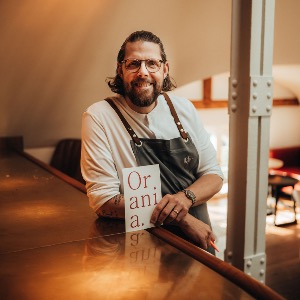
Philip Vogel, Executive Chef and Host, sees his work as a form of culinary diplomacy. For him, food is more than pleasure – it is an invitation to dialogue, a bridge between cultures. In conversation, he shares why a duck can become a symbol of understanding, how humour and composure help in the kitchen, and why Berlin, to him, is the most vibrant laboratory of diversity.
Photo: © Marc Seibold
A good menu can build bridges, evoke emotions and open conversations. If you were to cook for the United Nations – what dish would be your contribution to peace? And what should never appear on the plate when the goal is to connect cultures?
That’s a wonderful question to begin with. We’re known for our duck – so it would certainly be part of the menu. I’ve lived in China and London, was raised by an Italian nanny, and born in Cologne – so in a way, I’m a culinary mosaic. This diversity shapes my cooking.
Our duck is inspired by Peking duck – but we deliberately don’t call it that. I don’t think a German chef can simply take a traditional dish from another culture, make it his own, and claim to do it better. That would feel presumptuous. Yet I find it fascinating when people from other cultures reinterpret traditional dishes. That’s not cultural appropriation – it’s dialogue.
So my proposal for the United Nations would be: Let’s cook together. Everyone brings something to the table. I believe wars have never started over a meal – but many peace agreements have. Food creates closeness, understanding and respect. That’s why I love my profession – as a chef and hotelier, I create spaces where people from all backgrounds can meet.
There are dishes almost everyone can agree on – noodles, for example, in both Italy and China, as Spätzle in Germany, or falafel in the Middle East.
Absolutely. Many dishes share the same roots. The Chinese say they brought noodles to Italy – and there’s probably a grain of truth in that. Food has always travelled between cultures.
As for what should not be served: poor quality, that’s the only real mistake. Otherwise, nearly everything can be served – if it’s done respectfully. Of course, one must consider cultural and religious sensitivities: serving beef to an Indian delegation or pork to an Arab one would be inappropriate. But it also reminds us that what seems strange to us is often just a matter of perspective. An Indian might be shocked that we eat beef, just as many Europeans are appalled that some in Asia eat dogs. A little humility would serve us all well.
At the Orania, people from politics, culture and diplomacy often meet. Do you sometimes feel that more is negotiated at the dinner table than in conference rooms?
Definitely. After long meetings, often held in our upstairs salon, I notice how people relax once they sit down to eat. Conversations become more open, more human. I truly believe that good decisions are made at the table – over good food, good conversation, and perhaps a good glass of wine. When people are content, compromise becomes easier.
In the kitchen, as in diplomacy, things rarely go according to plan. How do you handle those moments?
In my early years, I was quick-tempered – the classic young chef with a red face when something went wrong. Today I’m much calmer. Mistakes happen – in life and in the kitchen. What matters is how you deal with them. If you own up to your mistake and explain it with a smile, people understand. Honesty lasts the longest. And humour helps – luckily, we Cologne natives have plenty of that in our DNA.
Berlin is often called a melting pot of cultures. Your cuisine reflects that. How would you describe the taste of Berlin?
Berlin is the youngest capital in Europe – and you can feel it. People from all over the world, and from every part of Germany, have made it their home. Everyone brings something of their own, which makes the city’s food scene incredibly exciting. The Berlin taste is international, open-minded, and bold. We don’t need to hide behind Paris, New York or London. And the beauty of it: Berlin is still defining itself – expectations are modest, curiosity is great. I always say: if you want to experience the new, diverse Germany, come to Berlin.
Germany’s Business Sentiment Dips Amid Pessimism for Recovery
The latest Ifo Business Climate Index shows that sentiment among German companies weakened in November 2025, slipping to 88.1 points from 88.4 in October. While businesses rated their current situation slightly more positively, expectations for the coming months fell, signaling a persistent lack of confidence in a near-term economic recovery.
Manufacturing companies were particularly pessimistic about their future prospects, reporting lower order books even as current conditions improved. In contrast, the service sector saw modest improvements in current conditions, although transport and logistics faced setbacks, while tourism showed signs of improvement. Trade and retail sentiment declined, dampened by a disappointing start to the Christmas season, and construction showed improving conditions but continued weak demand.
The Ifo report emphasizes the growing uncertainty in predicting the German economy’s trajectory. Tools such as the Business Cycle Clock, Heatmap, and Business Uncertainty Index illustrate that while some sectors hover in recovery, others are slipping into slowdown or crisis, highlighting the uneven nature of growth. For policymakers and investors, these insights offer a clear signal: structural challenges remain, and caution is warranted when planning for the months ahead.
Read the full report and explore the charts on the Ifo Institute website.
UK moves to secure critical minerals for net-zero and economic resilience
The UK’s Critical Minerals Strategy – Vision 2035 lays out a clear framework to reduce dependency on volatile global supply chains. With projected demand for copper set to nearly double and lithium demand rising by 1,100% by 2035, the strategy signals a proactive approach to supply security. This sits squarely at the intersection of geopolitics, economic security, and Europe’s industrial transformation — exactly where supply chains and state power now collide. High reliance on a few countries for critical minerals exposes the UK to potential disruptions in electric vehicle production, renewable energy deployment, and advanced manufacturing.It also reflects a broader global repositioning as countries adapt to intensifying competition over minerals dominated by China and contested by the US and EU.
The strategy is built around two main pillars: optimising domestic production and diversifying global supply networks. Domestically, the government targets a 10% supply of annual critical mineral demand through local production and 20% via recycling, backed by funding up to £50 million from the Department for Business and Trade (DBT). This mirrors the EU’s own push for domestic extraction, recycling, and strategic stockpiles — policy areas Germany has been particularly vocal about. Internationally, the UK aims to limit reliance on any single country to 60% of annual demand by 2035, leveraging partnerships with Canada, Australia, and the EU while using financial markets, research, and R&D to strengthen its position. For Germany and other EU states, the UK’s diversification benchmark offers a reference point as they develop their own de-risking strategies in response to Chinese export controls. As for the policymakers and industry alike, these measures are not merely aspirational. They create actionable pathways for securing strategic resources, mitigating supply risks, and supporting the UK’s green transition while reinforcing long-term economic resilience. Taken together, the strategy offers a practical blueprint for mid-sized powers navigating a world where mineral supply chains have become instruments of geopolitical leverage.
Read the full policy paper „Vision 2035: Critical Minerals Strategy“ on GOV.UK.
Trump’s 28-point plan for Ukraine
In the latest podcast of the European Council on Foreign Relations (ECFR), Mark Leonard was joined by Jana Kobzova, co‑director of ECFR’s European Security Programme, and Jim O’Brien, former US assistant secretary of state for Europe, to dissect the recently leaked 28‑point plan proposed by the US as a framework for ending the war in Ukraine. The discussion highlights the far-reaching implications of the plan, not only for Kyiv but for European security and transatlantic relations. According to the hosts, the proposals demand major territorial concessions from Ukraine, including recognition of Russian control over regions such as Crimea, Luhansk, and Donetsk, and impose restrictions on Ukraine’s military capabilities alongside a constitutional ban on future NATO membership. Kyiv has rejected the plan as a capitulation, while European governments are pressing for a meaningful seat at the negotiating table. This episode fits well within our editorial lens, because it examines the political and institutional consequences of a potential settlement proposal — not just the battlefield dimension of the war. Yet Europe’s influence remains uneven. Its leverage comes less from military weight and more from its long-term role in reconstruction funding, security guarantees, and the political sustainability of any future settlement. European leaders argue that without their involvement, a US-brokered proposal risks creating obligations they will ultimately be responsible for upholding.
The panel noted that the plan appears to hint at a broader shift in US strategy, one that may reward Russian aggression and shift the burden of European security onto the continent itself. The discussion explored the tension between short-term diplomatic expediency and the long-term consequences for Ukraine’s sovereignty, European cohesion, and the credibility of Western security guarantees. If the parts of the plan were implemented, the outcome could destabilize the balance of power in Europe and leave open the possibility that Ukraine would be coerced into a settlement on Russia’s terms rather than a negotiated peace based on its territorial integrity. The podcast underscores the complexity of European security today: Europe must navigate competing pressures from the US, Russia, and the realities on the ground in Ukraine, all while maintaining its own strategic autonomy. The speakers also stressed that any framework imposed without meaningful European input could reshape the continent’s security architecture for decades — affecting NATO’s credibility, EU unity, and the balance of power between Washington and European capitals.
Read the full discussion and listen to the full podcast on the ECFR website.
What are the risks of Afghanistan-Pakistan tensions escalating?
Al Jazeera’s Inside Story lays bare how TTP-driven violence and tit-for-tat strikes are shredding the fragile economic lifelines along the Afghanistan–Pakistan border: markets stand empty, trucks loaded with perishables rot at closed crossings like Torkham, and traders on both sides count daily losses in the millions. What starts as security clashes quickly cascades into humanitarian strain — displaced Pashtun families, stalled remittances, and supply shortages that hit urban centres from Peshawar to Kabul hard.
For EU diplomats in Berlin, this isn’t distant South Asian friction: it’s a live warning on how proxy blowback and border militarisation can tank regional trade worth billions, disrupt Central Asian corridors, and spike migration pressures on Europe’s southern flank. With Qatar and Turkey already mediating fragile ceasefires, the real diplomatic test lies in stitching together trade normalisation and local development pacts — before the frontier’s collapse pulls in wider powers and turns economic interdependence into a security trap.
Watch the full episode on Al Jazeera’s YouTube channel.
- Your Party’s first conference shows little sign of achieving a fresh start. theguardian.com
- Young leaders in Southern Africa rise to the challenge of climate change. iol.co.za
- Ukraine: Peace Through Bungling. theatlantic.com
- Swiss politicians decry „gold bar diplomacy“ in Trump trade deal. ft.com
- Baltic nations suffering from Russia sanctions win EU relief. politico.eu
- Europe is preparing legal groundwork for reparations loan to Ukraine. kyivindependent.com
- How Xi Played Trump – Beijing Gambled and Is Now Reaping the Rewards. foreignaffairs.com
How the US could leverage its G20 presidency after a year of opposition
Chatham House analysis questions whether the US under President Trump will transform its 2026 G20 presidency – culminating at his Doral golf club – into a transactional „dealmaking club“ rather than a multilateral consensus machine. After boycotting South Africa’s summit and criticising themes like equality and sustainability, Washington now outlines a narrower agenda: deregulation, growth, energy security, critical minerals, and selective debt relief that avoids letting „recalcitrant creditors“ like China off the hook.
Treasury Secretary Scott Bessent’s priorities shift from broad equity pledges to more concrete, bilateral-style pacts. These include mineral-processing deals linking industrial economies to African value chains, and energy investments mixing nuclear, LNG, and US Export-Import Bank financing. This approach could produce useful templates for trade and economic security at a time of fiscal fragility and tech rivalry. But it also risks sidelining Global South concerns — and adding volatility if Fed tightening or US domestic politics pull attention away.
For EU diplomats in Berlin, the stakes are immediate: a US-led G20 covering 85% of global GDP sets templates for critical minerals diversification (vital for Germany’s industry) and debt transparency that could pressure EU positions on China and emerging markets. Success hinges on whether Trump leverages the forum for targeted wins – or lets personalities overshadow progress on imbalances that hit European exports and supply chains hardest. For Berlin, the G20 presidency will shape how the US plans to use economic security tools that directly affect EU supply chains.
Know more on Chatham House’s website
The aim is EU accession: Foreign Minister Wadephul travels to the Western Balkans
Foreign Minister Johann Wadephul’s tour across Bosnia and Herzegovina, Montenegro, Albania, Serbia, Kosovo, and North Macedonia from 16–19 November underscores Berlin’s renewed attention to the Western Balkans. For Germany, the region is Europe’s geopolitical frontline — essential in countering Russian aggression and limiting Chinese influence amid the war in Ukraine. The visit builds on the Berlin Process summit in Belfast — the latest round of the EU-backed initiative promoting regional cooperation and reform, prioritising merit-based reforms in the rule of law, anti-corruption, and democratic standards, with frontrunners Albania and Montenegro earning praise for advances while others face calls for bigger change.
Energy diversification features prominently too, mirroring Germany’s shift from Russian gas: diversifying energy sources aims to strengthen long-term energy sovereignty and resilience, alongside vows to combat disinformation undermining EU alignment. For Berlin diplomats, this isn’t optional: a united Western Balkans fortifies EU borders, secures energy routes, and sustains the Berlin Process as a reform accelerator—essential as domestic scepticism tests Germany’s enlargement credibility.
Know more on the Federal Foreign Office’s website.
The Global Public Policy Institute (GPPI) delivers incisive, evidence-based analysis on EU enlargement dynamics in the Western Balkans, bridging regional think tanks with Brussels policymakers to tackle governance reforms, rule of law challenges, and economic integration hurdles amid geopolitical headwinds. Its publications – like those linking asylum reform to accession pathways – cut through enlargement fatigue by amplifying civil society voices and proposing practical incentives that sustain credible progress on the EU path. GPPI’s collaborative networks foster inclusive policy dialogue, ensuring local insights shape EU-level decisions while addressing bilateral disputes and hybrid threats that test the region’s resilience.
Visit their website to track GPPI’s latest publications.
13th Global Dialogue Platform: Decade of Anticipatory Action
The 13th Global Dialogue Platform on Anticipatory Humanitarian Action convenes 2-4 December 2025 in a hybrid format – Berlin in-person (invitation-only, limited capacity) and online, open to all. Hosted by the Anticipation Hub (German Red Cross, IFRC, Climate Centre) with FAO, WFP, Start Network, Welthungerhilfe, OCHA, and German Federal Foreign Office support, it marks 10 years of shifting humanitarian systems from reaction to anticipation via plenaries, panels, ignites, workshops, and performances in English (Arabic/French/Spanish interpretation for plenaries).
Under the theme “Anticipatory action: a decade of learning, a future in a changing humanitarian environment,” sessions dissect successes, failures (e.g., failed activations, fragile contexts), and scaling paths through innovative financing and system integration amid crises.
Register for online participation on the Anticipation Hub’s event page.
Europa und Afrika: Koloniale Vergangenheit, gemeinsame Zukunft
On 10 December 2025 (6-8 PM) at the European House (Unter den Linden 78, Berlin), JEF Berlin-Brandenburg hosts a discussion on Europe-Africa relations shaped by colonial legacies and today’s global shifts. The panel examines equal partnerships, development cooperation, EU trade’s role in building the African Continental Free Trade Area (AfCFTA), the Global Gateway Initiative, and raw material interdependencies.
Experts include Manica Hauptman (European Commission Representation in Germany), Omotunde Kasali (Economic Network Africa), Sophie Knabner (VENRO), and Dr. Boniface Mabanza (Werkstatt Ökonomie). The event will be held in German, with in-person or Zoom participation available. Register by 8 December via politcal.de.
Otto is the kind of place that feels effortlessly grounded – a restaurant that cooks with confidence, not flash. The menu is built around seasonal produce from small regional farms, and you can taste that simplicity in every dish. Nothing is overworked; everything has purpose. The space itself is warm in a quiet, unpretentious way, making it ideal for long dinners where the food slowly becomes part of the conversation. If you want Berlin cooking that’s honest, thoughtful, and rooted in the land around it, Otto is an easy choice.
WD3 is a great stop if you’re looking for design pieces that feel distinctly Berlin – clean lines, thoughtful craftsmanship, and a mix of contemporary and mid-century influences. Their collection ranges from furniture to lighting to smaller interior objects, all with that quiet, refined character that makes a space feel considered rather than cluttered. It’s the kind of shop where you go in with no fixed plan and walk out with something that immediately makes your home feel more grounded and intentional.