
Cultural Diplomacy in Berlin, US Geopolitical Shifts, China Strategy Reframed, Europe’s Defence Readiness, The Future of EU Cities
Which recent policy shift in Washington places new pressure on Europe to rethink its China strategy?
Trump’s November 2025 National Security Strategy, which demands greater allied burden-sharing and frames China as the central long-term rival.

Dear Readers,
This week brings an unusually wide spectrum of stories — yet at their core they all revolve around a simple, important question: how do societies stay cohesive when the surrounding pressures grow?
At the Friedrichstadt-Palast, Berndt Schmidt reminds us that culture is not just entertainment, but a quiet force of democratic confidence. And speaking of culture: the Palast has once again brought Frida back to the stage. I had the honor of contributing as a cultural advisor to this production, and I can sincerely recommend it. It will only run for a few months — if you have the chance, it’s truly worth experiencing.
On the geopolitical stage, the contrasts are sharper. Washington’s internal struggles around the MAGA movement, its firmer posture toward China, and rising tensions with Venezuela all signal that US politics are entering a more assertive and less predictable phase. The new National Security Strategy makes this clear, and Europe — Germany in particular — will need to read carefully between the lines of what „burden-sharing“ now implies.
In Brussels, the conversation is equally consequential. The European Parliament’s Defence Readiness 2030 report offers a sober view of what it would take for Europe to become a capable security actor. At the same time, the Commission’s new Agenda for Cities is a good reminder that resilience isn’t built by armies alone, but by the ways our communities live, work, and move every day.
As Tanzania and Kenya celebrate their independence days, it’s also a moment to look beyond Europe’s immediate neighbourhood. Both countries have become increasingly meaningful partners in questions of energy, security, and regional diplomacy — a sign of how global relationships are shifting and how Europe is no longer the automatic centre of gravity.
Taken together, these stories reflect a world searching for new balances of power, new expectations, and new shared responsibilities. Our task is to understand not only the headlines but also the deeper currents that shape them.
If you would like to contribute articles, event coverage, or press releases for upcoming editions, please reach out at editorial@diplomacy.berlin
Un abrazo,
Sigrid Arteaga M.
Where Spectacle Meets Responsibility: Berndt Schmidt on Art, Democracy, and Cultural Diplomacy
„Art cannot resolve conflicts, but it can spark empathy.“
Where Berlin’s turbulent past meets its most dazzling present, Berndt Schmidt has transformed the Friedrichstadt-Palast into far more than a venue for grand entertainment — he has shaped it into a cultural voice for openness, diversity, and democratic confidence. Under his leadership, the Palast embraces both its complex history and its global audience, using spectacle not as escapism but as a bridge between people.
As Artistic Director and CEO, Schmidt has guided the house through record-breaking years and an ongoing redefinition of what a publicly funded stage can stand for. In the following conversation, he reflects on the Palast’s roots, its role in cultural diplomacy, and the responsibility of art in polarized times.
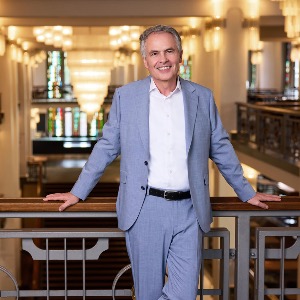
The Friedrichstadt-Palast is not only a stage for grand shows, but also a symbol of openness, diversity, and creative freedom. What does the Palast’s work today say about the self-image of a democratic society?
Our stage history begins in 1919 at the Großes Schauspielhaus. Founder Max Reinhardt was of Jewish descent; under the National Socialists, the house became the regime’s largest propaganda stage, and in 1947 it evolved into the Friedrichstadt-Palast. A place that has witnessed two dictatorships, division, and reunification knows how fragile freedom is. That is precisely why we acknowledge our Jewish roots and our commitment to an open, democratic society. As a publicly funded stage, we aim not only to offer great entertainment on the world’s largest theatre stage, but also to create spaces where differences are taken for granted. Our ensemble onstage, backstage, and in front of the stage is international, inclusive, and multi-generational— a small model of how a diverse democracy can function: with respect, curiosity, and the freedom to be oneself.
You welcome guests from all over the world. To what extent do you see the Palast as a place of cultural diplomacy—as a stage where Germany can make itself understood internationally through art and emotion?
For me, the Palast is a stage of cultural diplomacy in the best sense: we tell stories with images, music, and movement that work without translation. Our Grand Shows deliberately use very little dialogue; international guests understand them emotionally, even if they do not speak German. At the same time, the venue—with its diverse ensemble—presents a modern image of Germany: open, respectful, curious about the world. Those who visit us experience a country that defines itself not through isolation, but through artistic generosity.
The Palast has a turbulent history—from DDR tradition to today’s international Grand Show. What responsibility does a publicly funded institution carry in times of social polarization, and what stories do you want to tell in the future?
From a house with Jewish roots, a Nazi and GDR past, and now an international Grand Show operation arises a special responsibility. We are publicly financed, meaning we are neither a private stage nor a state mouthpiece, but a place where social tensions should be reflected without being further inflamed. I am interested in the question: What holds a society together as it becomes more diverse and louder? In the future, we want to tell even more stories about desire, identity, and cohesion—not as political instruction, but as emotional experience. Art cannot resolve conflicts, but it can spark empathy and make clear what is at stake when we relativize democracy and human dignity.
More Information: palast.berlin
The US–Venezuela Flashpoint: A Geopolitical Flashpoint
The accelerating US-Venezuela confrontation has become the Western Hemisphere’s most volatile geopolitical metric this winter, revealing how quickly regional disputes can harden into global pressure points. Washington’s deployment of the USS Gerald R. Ford and 15,000 troops, paired with an unprecedented sanctions squeeze and a $ 50 million bounty on Maduro, signals a return to force-backed hemispheric doctrine. Meanwhile, Caracas’s mobilization of 200,000 troops and reliance on Russian advisors and Chinese shadow-fleet financing underscore the externalization of the crisis. For policymakers in Berlin and Brussels, the numbers behind the standoff are stark: Venezuelan output hovering below 800,000 barrels per day, potential Brent spikes past $100, and migration surges already testing EU corridors. What makes this flashpoint different from historical U.S. interventions is its fusion of naval signaling, economic coercion, and proxy entanglements—an early stress test for transatlantic coordination in an era where regional instability can rapidly cascade into energy volatility, inflationary pressures, and normative friction at the UN.
Read the full Article on Diplomacy Berlin.
National Security Strategy of the United States of America (November 2025)
The recently published 2025 US National Security Strategy (NSS) casts a stark shadow over Europe, painting the continent not merely as economically stagnant but facing a prospect of „civilizational erasure“ due to migration, regulatory policies, and a loss of self-confidence. This critical assessment frames a major policy pivot, where the US goal is to help Europe „correct its current trajectory“ and become a strong, aligned partner. Critically, this ambition is tied to the demand that NATO members must meet the Hague Commitment to spend 5% of GDP on defense by 2035. The push for this new standard—up from the long-held 2% target—is seen in Washington as a necessary step to shift the defense burden onto Europe itself, demonstrating strength as the best deterrent in an era of renewed great power competition.
For Berlin, the NSS introduces dual diplomatic and economic pressures. On the one hand, the strategy calls for an „expeditious cessation of hostilities in Ukraine“ to stabilize European economies and reestablish strategic stability with Russia. While Germany welcomes all talks aimed at ending the war, the Foreign Ministry has recently voiced doubt, noting that it currently sees „no signs that Russia is shifting into negotiating mode“. On the other hand, German companies continue to struggle with economic stagnation, and despite positive signs of recovery in consumption, experts still forecast weak GDP growth for 2025 (around 0.2%). The NSS highlights the perverse effect of the Ukraine War, noting that German chemical companies are now building plants in China using Russian gas that is unavailable at home, thereby creating new external dependencies and underscoring the uneven nature of the global economic landscape.
Against this backdrop of strategic realignment and economic caution, Berlin remains a hub for focused diplomatic dialogue. The German Council on Foreign Relations (DGAP) is hosting a high-level workshop on strengthening Conventional and Nuclear Stability in the Euro-Atlantic and Indo-Pacific on December 9. This discussion directly addresses the NSS’s central themes of deterrence and balance of power in both theaters. Furthermore, a crucial event focusing on Germany’s Global Health Policy will convene on December 8, shifting the lens from defense to international resilience and effective engagement in times of strained international relations. These events underscore that even as Europe is asked to take primary responsibility for its security, strategic engagement remains vital to safeguard its collective defense and global influence.
To read the United States National Security Strategy in detail, visit the White House official website.
Splits in the Maga movement
The MAGA (Make America Great Again) movement is facing a profound reckoning, as ideological splits and generational shifts expose tensions between Donald Trump’s core base, rising far-right figures, and traditional conservative factions. In a revealing interview, Jacob Heilbrunn explains how Tucker Carlson’s decision to host Nick Fuentes—a white nationalist and antisemite—sparked outrage among establishment Republicans while earning Trump’s defense. Fuentes’ extremist views, including Holocaust-denial and admiration for Hitler, highlight the growing influence of radical elements that energize Trump’s rural and hardcore supporters. Meanwhile, JD Vance has chosen a cautious silence, balancing the need to appeal to the Maga base with maintaining credibility among moderate Republicans. This delicate maneuver reflects the movement’s broader struggle to reconcile its populist-nationalist ethos with political pragmatism.
Heilbrunn also notes a shifting ideological landscape within the younger GOP, with increasing anti-Israel sentiment challenging decades of neoconservative orthodoxy. At the same time, the Epstein scandal threatens to weaken Trump’s control, as congressional pressure grows to release sensitive files, revealing vulnerabilities in the movement. These overlapping pressures—internal disputes, radicalization, and external controversies—underscore the precarious position of the MAGA coalition. The Republican Party now faces a period of significant transformation, as loyalty to Trump, media personalities like Carlson, and the strategic priorities of traditional conservatives collide, with far-reaching implications for the future of U.S. politics and the broader conservative movement.
Listen to the full podcast on Financial Times.
Trump’s New National Security Strategy Sharpens the US Focus on China — and Raises Stakes for Europe
President Trump’s updated National Security Strategy places China firmly at the center of US foreign-policy planning. It keeps US support for Taiwan intact but leans heavily on Indo-Pacific partners to shoulder more of the military and financial load. Washington frames deterrence as a mix of a stronger defence industrial base, higher defence spending, and long-term dominance in economic and technological competition with Beijing.
For Germany, this matters directly. A more confrontational US posture toward China exposes Berlin’s long-standing economic dependence, particularly in autos, machinery, and green tech. If Washington expects allies to “share more of the burden,” Europe—and Germany in particular—will face louder calls to align more closely with the US position on Taiwan, export controls, and tech security. The strategy also signals that economic rivalry with China will intensify, increasing pressure on Germany to de-risk its supply chains and rethink its market exposure in a world where US–China competition is now the defining frame.
Watch the full video on DW News.
- South Asia needs climate solidarity. indianexpress.com
- Trump’s New National Security Strategy Goes Full „America First“. foreignpolicy.com
- Taiwan’s Opposition Leader, Once for Independence, Turns Toward China. nytimes.com
- The End of the Israel Exception – A New Paradigm for American Policy. foreignaffairs.com
- How Belgium became Russia’s most valuable asset. politico.eu
- Delayed Climate Mitigation Could Trigger A Socioeconomic Tipping Point. eurasiareview.com
REPORT On European Defence Readiness 2030: Assessment Of Needs
European Parliament analysis questions whether the EU under Readiness 2030 will transform its defence spending—culminating in an EUR 800 billion capability gap closure by 2030—into a coordinated industrial powerhouse rather than fragmented national efforts. After decades of underinvestment exposed by Ukraine, Brussels now outlines a narrower ReArm Europe agenda: joint procurement targets (40% by 2030), SME financing via the Savings and Investment Union, and EIB mandates scaling to EUR 240 billion in extra investment, avoiding letting “non-EU suppliers” like the US dominate 78% of procurement.
Rapporteur Christophe Gomart’s priorities shift from broad NATO 2% pledges to concrete, EU-centric pacts, including EUR 115.7 billion for defence-space under the next MFF (fivefold increase) and EUR 15.7 billion for dual-use military mobility. These blend equipment procurement (up 39% to EUR 88 billion in 2024), R&D (EUR 13 billion), and EDTIB support for 580,000 direct jobs, producing templates for strategic autonomy amid tech rivalry and hybrid threats. This approach could mobilise fragile SME chains but risks sidelining fiscal hawks if EIB AAA ratings or national budgets constrain scaling.
For diplomats in Berlin, the stakes are immediate: an EU-led defence bloc covering 27 Member States sets templates for eastern-flank resilience (drones, air shields), Ukraine support, and industrial de-risking from non-EU dependencies—vital for Germany’s exports and supply chains. Success hinges on whether Brussels leverages the ReArm plan for targeted wins—or lets fragmentation overshadow progress on gaps hitting European deterrence hardest. For Berlin, Readiness 2030 will shape how the EU deploys financial-security tools that directly affect national industries and transatlantic ties.
Know more on the European Parliament’s website.
The EU Agenda for Cities: Shaping Europe’s Urban Future
`On 3 December 2025, the European Commission launched the EU Agenda for Cities, a strategic framework aimed at empowering cities to tackle local challenges that contribute to broader EU goals. Recognizing that approximately 75% of the EU population lives in urban areas, the Agenda emphasizes cities as pivotal hubs for prosperity, innovation, social inclusion, and sustainable development. It aims to strengthen the territorial and urban dimensions of EU policies by promoting continuous dialogue with local authorities, simplifying support mechanisms through a consolidated EU Cities Platform, and enhancing strategic investment opportunities.
The Agenda addresses pressing urban challenges such as affordable housing, high energy costs, social segregation, climate impacts, and demographic shifts. It calls for better dialogue with city leaders, streamlined funding access via a single-entry web portal, and expanded investment through cohesion policy, the European Competitiveness Fund, Horizon Europe, and other instruments. Implementation starts under the current financial framework and will continue through the next programming period with initiatives like the European Urban Initiative Innovative Actions and regular reporting on the State of European Cities.
Executive Vice-President for Cohesion and Reforms Raffaele Fitto highlighted that the Agenda is built “with cities and for cities” to equip local leaders with tools to deliver tangible results, emphasizing that when cities lead, Europe succeeds by contributing 85% of EU GDP. This initiative complements existing frameworks such as the Territorial Agenda 2030 and the New Leipzig Charter and reinforces intergovernmental cooperation under the Urban Agenda for the EU.
Know more on the European Commission’s Regional Policy website.
Chatham House delivers pragmatic, actionable analysis on Europe’s strategic choices amid US retrenchment, Russian aggression, and economic competition, bridging policymakers in Brussels, Berlin, and national capitals with geopolitical foresight on defence, competitiveness, and global positioning. Its Europe Programme—focusing on the EU’s future, safeguarding security, and redefining Europe’s world role—cuts through political fragmentation with expert networks tackling Trump-era transactionalism, Draghi-inspired industrial revival, and NATO burden-sharing via bold proposals like €1 trillion Ukraine packages and NextGenerationSecurity instruments. Chatham House’s publications amplify pan-European insights, ensuring local security dilemmas and trade rivalries shape continent-wide decisions while addressing hybrid threats, tariff wars, and the quest for strategic autonomy that test EU resilience.
Visit their website to track Chatham House’s latest publications.
Navigating Multipolarity – Angola’s Middle Power Ambitions
Angola is stepping into a far more visible geopolitical role, and European Council on Foreign Relation’s (ECFR) online event on 10th December brings together leading voices to unpack what that shift means. With Luanda holding the African Union presidency and hosting major summits with the US and EU, the country is positioning itself as an emerging middle power—despite persistent domestic challenges. The conversation, featuring experts such as Giza Gaspar-Martins, Marta Michalunio-Matys, and Alex Vines, will explore Angola’s foreign-policy priorities, its growing presence in multilateral settings, and why global actors are suddenly paying closer attention. For anyone watching how Africa’s diplomatic landscape is changing—and how Europe might recalibrate partnerships—this is a sharp, timely session broadcast live from Luanda. To register visit ECFR’s website.
Climate Realism – Rethinking EU–South Africa Engagement
ECFR’s upcoming webinar looks at how the EU and South Africa can recalibrate their partnership after a dense year of global diplomacy, from South Africa’s G20 presidency to the AU–EU Summit in Angola and COP30 in Brazil. Drawing on the new policy brief Long walk to realism, the discussion brings together Sanusha Naidu and Risana Zitha, chaired by Alex Vines, to examine what a more pragmatic climate agenda could look like between Pretoria and Brussels. Expect sharp insights into green industrialisation, energy transitions, and South Africa’s evolving multilateral role, as well as the political constraints that shape cooperation. To register visit ECFR’s website.
Locanda 12 Apostoli offers more than a historic setting; it provides an opportunity to experience a cherished local tradition. A classic Berlin Sunday often begins with a walk around Grunewald Lake, followed by a restorative meal — and this former forest lodge, overlooking the water, is an ideal place to do so.
Combining understated elegance with the character of a traditional German guesthouse, the restaurant presents a refined yet welcoming atmosphere. Whether for a quiet weekend lunch, an informal diplomatic outing, or a moment of respite from the city, Locanda 12 Apostoli delivers a distinctly Berlin experience rooted in history, nature, and genuine hospitality.
Käthe Wohlfahrt Berlin is Christmas turned into a shop. Step inside and it feels like the holiday season never ends: hand-carved nutcrackers, wooden pyramids, delicate glass ornaments, and the kind of traditional German decorations you only find in places that still take craftsmanship seriously. It’s nostalgic without being kitschy, and the shelves are full of pieces that actually last—whether you’re picking up a small keepsake or a handmade centrepiece. If you need a gift that carries a bit of Berlin, a bit of Bavaria, and a lot of winter charm, this is the place.